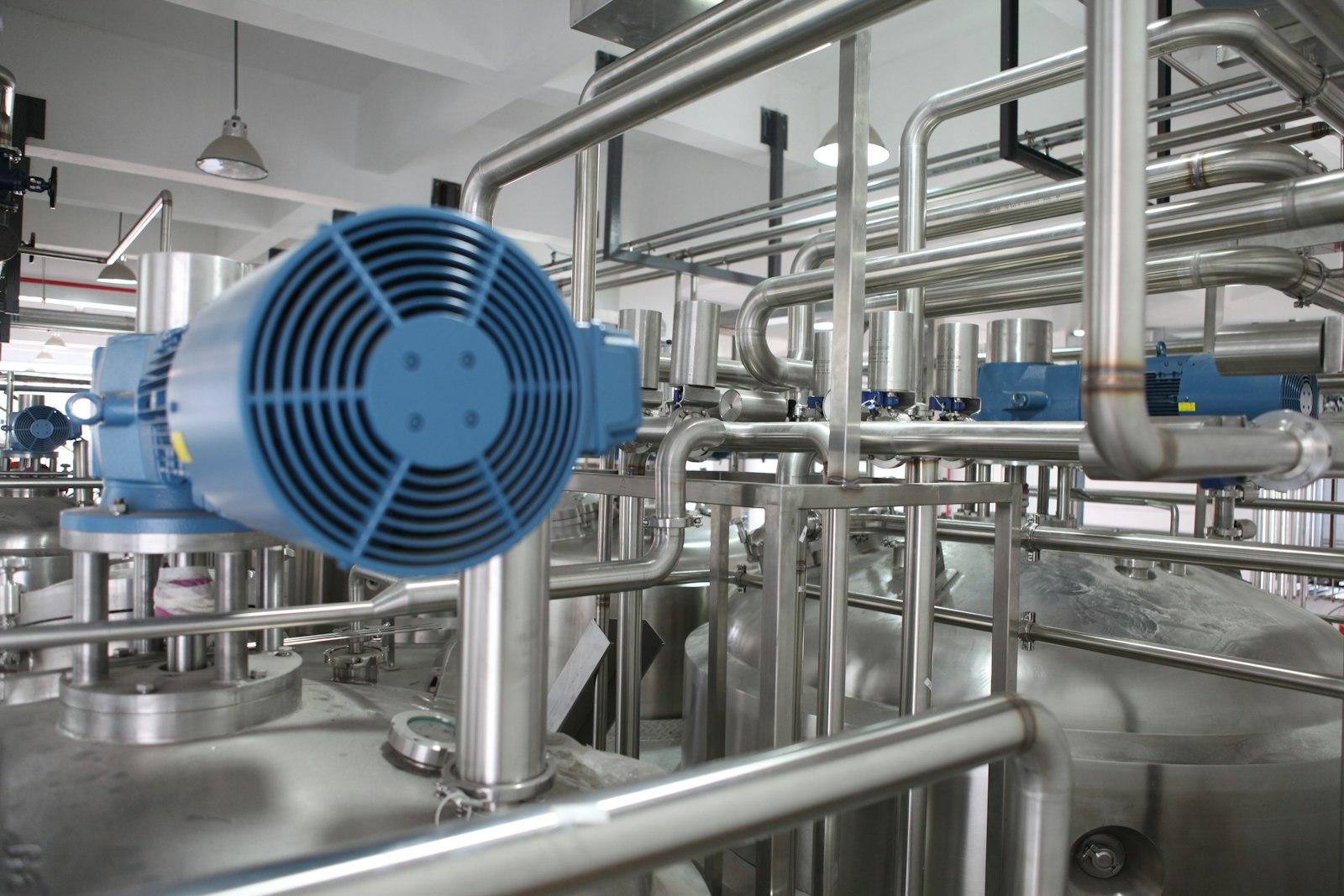
- 01Spice plants flow: cleaning → sterilisation (steam/ETO-free methods) → grinding (often cryogenic) → sieving/grading → blending → packing, under strict hygienic zoning.
- 02Cryogenic grinding with liquid nitrogen preserves volatile oils and colour — the quality differentiator for premium spice powders.
- 03Hygienic design (material flow, personnel/air zoning, washdown surfaces, allergen separation) is the defining layout constraint.
- 04BIM coordination keeps the tight hygienic zones, dust control, and services clash-free in a compact footprint.
Spice processing sits at the intersection of food safety and flavour chemistry. The heat of ordinary grinding drives off the very volatile oils that give spices their aroma, and raw spices carry a heavy microbial load that must be reduced without chemical residues. A modern spice plant answers both problems — with cryogenic grinding to protect flavour and hygienic zoning to protect safety — inside a compact, washdown-friendly building.
The spice processing flow
- 01Cleaning & sorting
De-stoning, magnetic separation, and optical/manual sorting remove foreign matter and off-grade material.
- 02Sterilisation
Steam sterilisation (or other residue-free methods) reduces microbial load to food-safe levels without chemical residues.
- 03Grinding
Cryogenic grinding with liquid nitrogen keeps the product cold, preserving volatile oils, colour, and aroma; ambient grinding is used where cost outweighs premium quality.
- 04Sieving & grading
Powder is sieved to defined mesh sizes; oversize recirculates.
- 05Blending & packing
Single spices or blended masalas are homogenised and packed, often under nitrogen for shelf life.
Hygienic zoning drives the layout
In a spice plant, the layout is dictated by hygiene. Raw and finished material flows must never cross; personnel and air move from clean to less-clean zones, not the reverse; surfaces must be washdown-rated; and allergen or strong-aroma products need separation to prevent cross-contamination.
- Unidirectional material flow with physical separation of raw and finished zones.
- Personnel and air-pressure zoning (higher pressure in cleaner areas) to control cross-contamination.
- Washdown-rated finishes, coved floors, and drainage designed into the architecture.
- Dedicated dust control and aspiration — spice dust is both a hygiene and an explosion consideration.
Flavour and safety, engineered together
A premium spice plant has to protect flavour and guarantee safety at once, in a small footprint packed with services. Spetia Engineering coordinates process, hygienic architecture, and MEP in one model so the plant is both audit-ready and buildable.