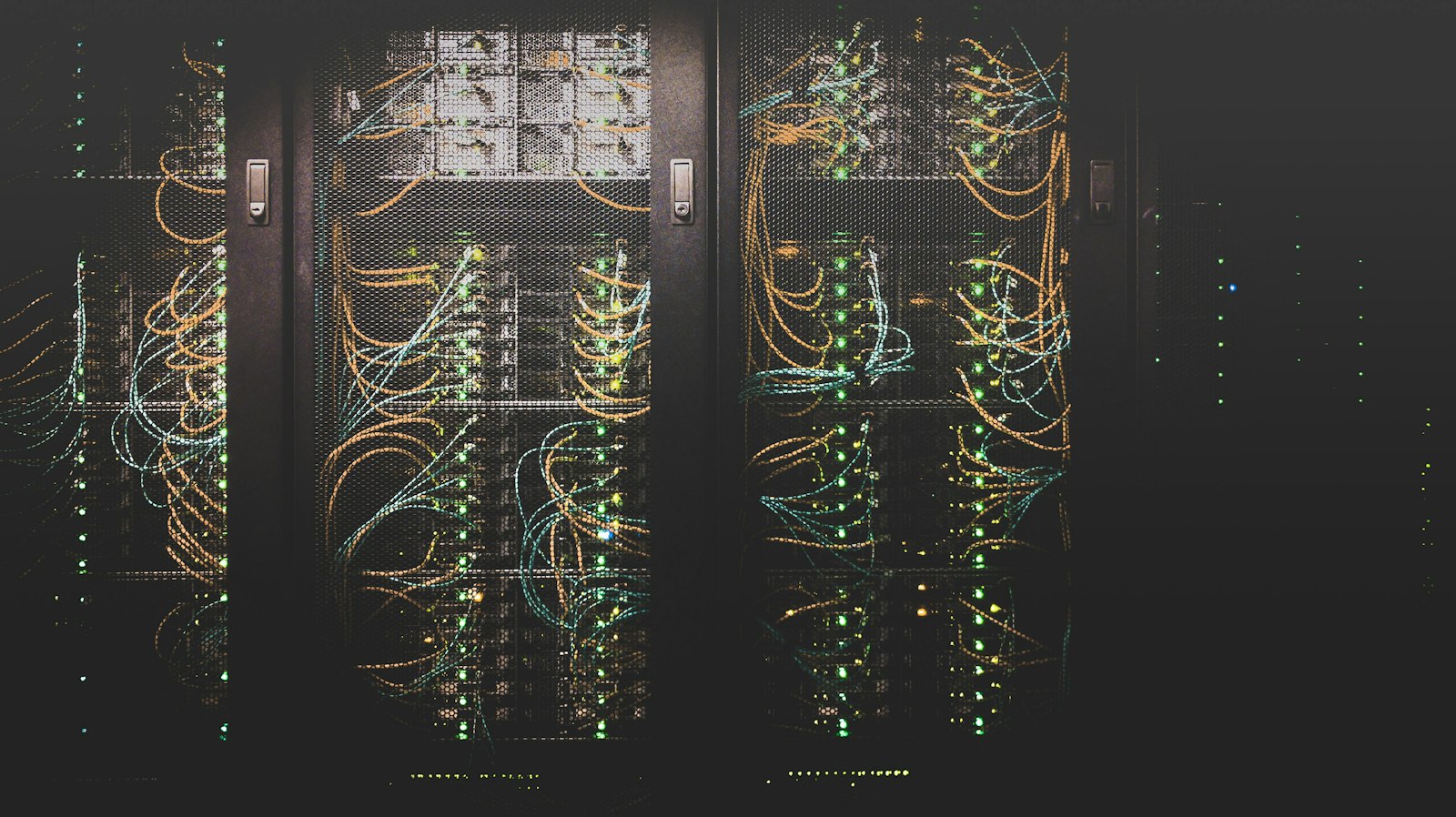
- 01Cooling is where data centers most often underperform; CFD simulation predicts airflow and hotspots before a rack is installed.
- 02Hot-aisle/cold-aisle containment prevents hot and cold air mixing, the single biggest efficiency win in air cooling.
- 03PUE (Power Usage Effectiveness) measures how much overhead cooling and power add; good design drives it toward 1.2 or below.
- 04Rising rack densities push facilities toward liquid cooling, which changes the mechanical design fundamentally.
You can specify plenty of cooling capacity and still get hotspots, tripped equipment, and wasted energy — because cooling is about airflow, not just tonnage. Air takes the path of least resistance, hot and cold streams mix, and a rack in the wrong spot bakes while another is over-cooled. CFD (computational fluid dynamics) lets you see and fix all of this in simulation, before the facility is built.
Containment: stop the mixing
The foundational move in air cooling is hot-aisle/cold-aisle containment: arranging racks so cold supply air and hot exhaust air are physically separated, and containing one or the other so they can’t mix. Mixing is the enemy — it forces you to over-cool to compensate, wasting energy and still risking hotspots.
What CFD reveals
- Hotspots: racks or zones that won’t receive enough cold air at design load.
- Bypass and recirculation: cold air short-circuiting back to the units, or hot air recirculating into intakes.
- Effect of failures: what happens to temperatures when a CRAC unit drops (the redundancy scenario).
- Optimisation: floor-tile placement, containment, and setpoints tuned for efficiency before commissioning.
The shift to liquid cooling
As AI and HPC push rack densities far beyond what air can handle, facilities are moving to liquid cooling — rear-door heat exchangers, direct-to-chip, and immersion. This fundamentally changes the mechanical design: coolant distribution, manifolds, and leak management become central. Designing for a liquid-cooled future is now part of forward-looking data center engineering.
Cooling proven before construction
Spetia Engineering designs data center cooling with CFD verification and coordinates it in BIM, so airflow, efficiency, and redundancy performance are demonstrated in design rather than discovered on site.